Titus

Tool-free hinge fitting: what the T-type PressTo does differently

Fitting a concealed hinge has followed the same pattern for decades: insert the cup, find a screwdriver, drive the fixing screw, check it’s seated properly. The T-type PressTo removes one of those steps entirely. The hinge cup presses into place and locks with no screwdriver and no separate fixing step.

What “tool-free” actually means

PressTo changes how the hinge cup is fixed into the door, not how the hinge is adjusted afterwards. The cup presses into the pre-drilled hole and locks mechanically, and an audible click confirms it’s seated correctly.

On a standard hinge, you’re relying on feel and a visual check to know the fixing has taken – there’s no built-in confirmation. With PressTo, the click tells you straight away, so there’s no double-checking and no guessing whether the cup’s properly seated.

PressTo improves the speed of fixing the cup into the door. The 3Way mounting plate and the adjustment screws that fine-tune the door’s final position work exactly as they do on a standard T-type hinge.

Titus T Type soft closing hinge

Who saves the most time

Furniture and kitchen manufacturers feel this at production line scale. Removing the screwdriver step from cup fixing saves a small amount of time on each hinge, but that saving compounds. Across a full day’s output, on a line producing hundreds of doors, a few seconds per hinge adds up to a meaningful chunk of assembly time, and fewer opportunities for a screw to be driven at the wrong angle.

Kitchen and bathroom installers feel it differently. Fitting hinges on-site is often a solo job. The 3Way snap-on mounting means the hinge can go onto the plate from the front, back, or top, so the door doesn’t need to be held in an ideal position before the hinge goes in. PressTo adds to that by removing the need to keep a screwdriver to hand while balancing a door.

Flat-pack and retail furniture brands get a different kind of benefit. For someone assembling furniture at home with no trade experience, that audible click is intuitive confirmation that the hinge is on properly – no second-guessing.

What the installation difference looks like in practice

Standard T-type fitting: insert the cup, drive the screw, check the alignment, adjust if needed.

PressTo fitting: insert the cup, press firmly, hear the click. Adjustment still happens via the mounting plate exactly as before.

Two details matter for anyone assessing this at production level:

  • Misalignment tolerance of up to 0.6mm. Drilling patterns aren’t always perfect, even on a well-set-up line. The T-type is built to tolerate misalignment within this range without affecting how the hinge performs.
  • Substrate versatility. The expanding cup grips securely in chipboard, MDF, and solid wood, so the same fixing method works across the substrates most manufacturers are already using.

PressTo vs standard T-type – what’s the same, what’s different

The soft-close performance is identical between the two. So is compatibility with the T-type mounting plate range. Switching to PressTo doesn’t mean re-specifying your existing mounting plates or changing the rest of your hinge setup – the only change is how the cup fixes into the door.

FeatureStandard T-typeT-type PressTo
Soft-close
Cup fixing methodScrewPress-to-lock
T-type mounting platesCompatibleCompatible – same plates
3Way snap-on mounting
Audible confirmation of fitNoYes – audible click
Misalignment toleranceStandardUp to 0.6 mm
Noir finish availableNoYes

PressTo was designed using the same thinking Titus uses across its hinge engineering: reduce the total time and cost of getting a hinge installed correctly. For manufacturers who want a discreet, low-profile finish across a range, PressTo is also available in Noir. If you’re speccing or fitting hinges at any volume, it’s worth seeing how the T-type PressTo compares against what you’re using now.

If you’re looking for quality components at volume, you can get in touch with the team to discuss your specification requirements.

Titus

How Titus tests hinge performance – and what that means for your furniture

Every hinge Titus supplies goes through a structured testing programme before it reaches production. That process covers safety, functionality and performance, and the results are what give manufacturers confidence in the components they specify.

What performance testing covers

Performance testing looks at how a hinge behaves under conditions that reflect real use. For cabinet hinges, that means three things:

  • Durability – how the hinge holds up over repeated open-and-close cycles. This is a direct measure of long-term reliability, and the one that most directly affects how a product performs over its lifetime. The T-type 110 has been tested to 200,000 cycles, which equates to 25 years of consistent performance on a cabinet door.

  • Closing force – the force required to bring a door to close, measured across varying closing speeds. Soft-close consistency is measured directly during this test and the lifespan test, confirming that the T-type’s ConfidentClose action – rapid deceleration and a quiet landing in the final four degrees of closure – performs reliably regardless of how fast the door is pushed.

  • Sag – whether the hinge allows the door to drop over time under load. The T-type carries a 25% heavier door than comparable alternatives from a drilling depth of just 11.7mm, and sag testing is part of how that capacity is verified.
Titus PressTo Hinge Cup Locking

How the testing process works

Each product has a Product Specification Sheet, prepared by Titus’s R&D team. This document sets out exactly what acceptable performance looks like, detailing what is and isn’t acceptable for each specific product. It’s approved by the relevant Product Manager before testing begins.

From there, the process runs in three stages:

  1. Sample preparation – samples are sourced either from the R&D proto shop during development, or pulled directly from the production floor
  2. Testing – each test is run against the criteria defined in the specification, using specialist equipment in our own in-house lab
  3. Reporting – results are documented and assessed against the specification before the product is approved

Equipment used for hinge testing

Hinge testing requires specific kit. For the T-type, the testing setup includes:

  • A hinge life cycling jig for durability testing
  • Calibrated weights for sag testing
  • A ruler for measuring sag displacement
  • A digital force gauge to record closing force

At Titus, we run this testing at our own lab, used both for new product development and to check consistency across every production batch.

Standards Titus tests against

Titus’s testing criteria draw on two sources: internal engineering knowledge built up over years of product development, and the national and international standards that apply to furniture hardware.

For UK and European supply, products are tested against BS EN 15570, the primary standard for hinge strength, durability and corrosion resistance, and BS 6222, which sets performance requirements for domestic kitchen furniture. For international markets, Titus also tests against the relevant standards for cabinet construction and hardware performance.

What the results mean in practice

T-type hinge key performance figures

  • Tested to 200,000 opening and closing cycles (T-type 110)
  • Equates to approximately 25 years of everyday use on a cabinet door
  • Carries a 25% heavier door than comparable alternatives
  • From a drilling depth of just 11.7mm
  • Soft-close consistency across varying closing speeds
  • Every production batch tested in Titus’s own lab

“The testing process exists to remove uncertainty from the specification decision. When a manufacturer selects a Titus hinge, they’re not relying on a general claim about quality – there’s a documented result behind it.”

– Phil Beddoe, General Manager, Titus UK

For manufacturers producing at volume, a hinge that’s been tested at load, over cycles and against sag, on every production batch, is one that can be specified with confidence.

The T-type is available to trial through the Titus online trade shop. If you’re looking for quality hinges at volume, you can get in touch with the team to discuss your specification requirements.

Titus

Black cabinet hardware in UK kitchens: what’s behind the demand

Black cabinet hardware has been a standard in UK kitchens for several years now. What started as a premium design choice has moved steadily into mainstream ranges, and unlike some finishes that spike and fade, demand for black kitchen hardware has stayed consistent.

For designers and specifiers, that’s a useful signal. For manufacturers, it shapes what finish options need to be available, and what those finishes actually need to deliver.

Why black hardware works across kitchen styles

The appeal of black cabinet hardware comes down to a few things that work well together. 

Dark hardware, particularly black, looks considered and minimal. Against dark cabinetry, it sits almost invisibly within the design. Against lighter cabinets or natural wood, it works well as a deliberate contrast. Both directions work, which is why it’s held its ground across kitchen styles.

The shift towards handleless kitchen design has reinforced this. Where hardware is visible, for example, hinges, push latches or shelf supports, homeowners increasingly want it to look intentional. A polished chrome hinge in a dark, handleless kitchen can feel like an oversight.

There are practical benefits too. Dark finishes often show minor marks and fingerprints less obviously than bright metal, which matters in a room used every day.

What it means for manufacturers

Specifying a dark finish raises a few questions that need consideration:

  • Finish consistency across the build: Designers and homeowners notice when hardware doesn’t match. If the hinge is one shade and the push latch another, the finish looks inconsistent regardless of the quality of individual components.

  • Durability in kitchen conditions: Kitchens are demanding. Steam, moisture, cleaning products and daily contact all put surface finishes under pressure. A finish that looks good at installation but shows wear quickly could generate returns or complaints. For kitchen manufacturers, corrosion resistance in black cabinet hinges is as important as the colour itself.

  • Performance: A black soft-close hinge still needs to carry the door weight, adjust accurately and close consistently for as long as the component is in use. The finish is secondary if the hinge fails at the job.

Read more: how to specify soft-close cabinet hinges

Noir: how Titus approaches black cabinet hardware

Noir is Titus’s black cabinet hardware range. It’s a dark, uniform finish applied consistently across the T-type hinge family, push latches, shelf supports and connectors. The same finish appears from hinge to shelf bracket across a complete build, so there are no mismatches between components.

The T-type is a core product in the range – a concealed black soft-close hinge built for consistent performance at volume. It handles heavier doors with smooth, soft-close action, with three-way adjustment after installation and tool-free snap-on mounting. The T-type PressTo goes further. It locks into the door with an audible click for fast, repeatable fitting with no tools needed.

Corrosion resistance is built into the specification of every Noir component. These are durable black cabinet hinges and hardware designed to hold up in kitchens and bathrooms, against moisture, cleaning products and the kind of daily handling that shows up on lower quality finishes over time.

The Noir range covers:

  • T-type concealed soft-close hinges
  • Push latches
  • Shelf supports
  • Connectors

All in a consistent finish, so the full visible hardware specification can be met from one range.

Where Noir works in the build:

  • Dark handleless kitchens, where black cabinet fittings recede into the design
  • Light cabinet or natural wood schemes, where black hardware reads as a considered design choice
  • Bathroom vanity units, bedroom wardrobes and office fit-outs where a consistent black finish is needed throughout

Selected Noir products are available through the Titus online trade shop in box quantities with quick UK delivery – useful for smaller runs or trialling the range before committing at volume. For high-volume orders, the Titus team can advise directly. Contact us to find out more.  

Find out more about Noir

Noir Hinge In Situ

What to check when specifying black cabinet hardware

When looking at black cabinet hinges for a new range, these questions are worth putting to your supplier directly:

  • Does the finish run consistently across all the hardware needed for a complete build?
  • What surface treatment is used and what conditions has it been tested against?
  • How does the hinge perform on heavier doors, and does the finish hold up against more challenging conditions?
  • What are lead times and volume availability for black cabinet hardware specifically?

Read more: what to look for in a component supplier

Black cabinet hardware has moved from a design trend to a standard finish option in UK kitchen specifications. Whether it performs comes down to finish quality, component consistency and a supplier who can deliver at volume.

Our products are used in high volumes by some of the world’s most reputable kitchen, bathroom and furniture manufacturers, as well as being available to purchase in smaller quantities on our online shop. If you’re specifying black cabinet hardware for a new range or want to discuss Noir in more detail, get in touch with the Titus team.

Titus

A specifier’s guide to soft-close cabinet hinges: types, tolerances and test standards

Soft-close hinges are the expectation for fitted furniture now. Customers expect it in quality furniture, and when it’s missing or not performing properly, it’s one of the first things they notice.

Specifying them well is where it gets more involved. Door weight, overlay type, board material, drilling depth, performance level: the decisions made at this stage determine whether a hinge performs at scale or creates problems on the line and for the end product.

This guide covers the main hinge types available in the UK market, what tolerances matter in production and how the relevant test standard works in practice.

Types of soft-close cabinet hinge

Most soft-close hinges used in UK cabinet furniture are concealed hinges (or “cup hinges”), which stay out of sight to keep the focus on the furniture design. When specifying, the mounting system makes all the difference to assembly speed and reliability.

Mounting: from screw-on to toolless

The speed of installation depends on how the hinge attaches to both the door and the cabinet:

• Snap-on/clip-on: Our signature T-type hinge allows for tool-free “snap-on” mounting from three directions (front, back and top). This makes fitting tall doors with multiple hinges straightforward, even for a single installer.

• PressTo (tool-free cup): For an even faster fit, the T-type PressTo hinge locks into the door with an audible ‘click’, ensuring a secure and consistent fit every time. It makes door removal quick and speeds up assembly in high-volume production.

• Screw-on: The traditional method for those who prefer a classic fixing. They’re reliable and simple but usually slower to fit and adjust at scale.

Integrated vs add-on soft-close

• Integrated: Titus hinges feature damping built directly into the hinge cup. This one-step solution is cleaner, more durable and means the soft-close action is perfectly calibrated to the hinge’s movement.

• Add-on: Separate dampers offer more flexibility if you’re retrofitting or working with existing hinges.

Opening angle

The opening angle is fixed by the hinge design, so it’s worth confirming at the specification stage rather than adjusting later. A standard 110° opening works for most kitchen and bedroom doors. For internal pull-out drawers or built-in appliances, you’ll need a wider angle so the door swings fully clear. The T-type is available in a range of opening angles to cover these needs.

Overlay type

Concealed hinges are designed around the door’s position relative to the cabinet, and the “crank” of the hinge arm determines which type you need. A full overlay door covers the cabinet side completely. A half overlay door shares a central partition with the door next to it. An inset door sits flush inside the cabinet frame. Getting the right hinge and mounting plate combination for your overlay type is what gives you consistent door alignment.

Performance tolerances: what they are and why they matter

Tolerances in cabinet hinges come down to two things: how the hinge fits the panel and how much adjustment you have once the door is hung. Both matter when you’re producing at volume.

The cup bore

The bore needs to match the hinge specification. The standard cup bore for concealed hinges in Europe is 35mm. What varies is the cup depth. The T-type uses an 11.7mm drilling depth, which is ideal for thinner door panels where there is less material to work with.

Three-way adjustment

Quality concealed hinges offer three-way adjustment after installation. This lets you get every door sitting at a consistent gap without needing a perfect fit first time.

Test standards: what EN 15570 measures

EN 15570 is the main test standard for cabinet hinges in the UK and across Europe, adopted as BS EN 15570. It tests how a hinge performs under repeated use, as well as its strength and resistance to wear over time.

The standard uses performance levels. A higher level means the hinge has been tested to a greater number of cycles and more demanding conditions. It’s worth asking your supplier which level their product meets and whether that’s appropriate for your application.

Beyond the cycle testing, EN 15570 also covers strength. It tests the hinge, mounting plate and fixing as a system, which gives a more realistic picture of how the product will perform in use.

For kitchen and bathroom applications, it’s also worth asking about corrosion resistance. Hinges in those environments are exposed to moisture and cleaning products regularly, and not all products offer the same level of protection.

Choosing the right hinge for your specification

Hinge specification is one of those areas where small decisions early on can cause bigger problems later. These are the ones worth getting right from the start.

  • Specifying on price without checking the performance level. Two hinges can look identical in a catalogue but be tested to very different standards. If a product is positioned as durable, the specification needs to reflect that.
  • Not accounting for door weight. Soft-close performance can vary depending on how heavy the door is. The T-type is designed to carry a heavier door than many alternatives without the soft-close losing its consistency.
  • Not thinking about the board material. The board material your doors are made from can affect how the hinge fixes and performs, so it’s worth discussing with your supplier.
  • Relying on adjustment to fix bigger problems. Three-way adjustment is there to fine-tune, not to compensate for consistent errors in your production setup. If doors are coming out misaligned across a whole run, the hinge isn’t the issue.

What to ask your supplier

When evaluating a hinge for a new specification, these are the questions worth putting directly to your supplier:

  • What EN 15570 level does the hinge meet?
  • What board material and fixing method was it tested on?
  • What is the cup drilling depth?
  • How does the soft-close perform on heavier doors or if the hinge is slightly misaligned during fitting?
  • Can you supply consistently at volume and what lead times should we plan for?

Common questions

What does soft-close mean in test terms?

EN 15570 tests how a hinge holds up over time, but it doesn’t define how ‘soft’ the close feels. That’s down to how the hinge is engineered. When a manufacturer says their hinge is soft-close tested, it means the closing action remained consistent throughout the durability testing.

Is tolerance about size or movement?

Both. It covers how precisely the hinge fits the panel, and how much you can adjust the door position once it’s hung. A good hinge gives you confidence in both.

What certifications matter?

BS EN 15570 is the main one for hinge performance in the UK. For kitchens and bathrooms, it’s also worth asking about corrosion resistance, as products vary. If you’re unsure what to look for, the Titus team can advise based on your specific application.

Getting specification right from the start

A cabinet hinge is a small component, but it’s one of the few things the end user interacts with every day. How a door closes shapes how the product feels and how the brand behind it is remembered.

Getting the specification right from the start saves time, reduces returns and protects your reputation. If you’d like to talk through your requirements, the Titus team is happy to help.

Get in touch with the Titus team to discuss your hinge specification.
Titus

See Titus at KBB Birmingham 2026

Titus Plus talking to people at KBB this year

If you’re visiting KBB Birmingham 2026 (1st-4th March), come and see Titus on Stand R82.

We’ll be running live demonstrations throughout the show, with the technical team available to talk through specification and production requirements. The focus is straightforward: hardware that’s quicker to fit, easier to adjust and reliable in daily use.

Book your ticket

What you’ll see on the Titus stand

New launches: Vitek and Trax‑V

This year’s stand includes two new additions to the Titus drawer offering.

Vitek is an ultra-thin metal drawer system for modern furniture in kitchens, living spaces, bedrooms, wardrobes and vanities. It uses a 3D locking device to align the drawer front accurately, with a choice of full or single-extension runners. The locking device also makes it straightforward to fit the drawer onto the runners and remove it again when needed.

Trax‑V is a modular range of undermount runners for wooden drawers in everyday furniture. It uses Titus ART damping for smooth, quiet soft-close, supports loads up to 40kg and is available in single and full-extension versions.

T-Type hinge range

You’ll be able to see the latest additions to the T-type hinge family, including:

  • T-type PressTo: tool-free cup fixing with an audible click-lock, designed to reduce assembly time. Used with the Titus 3Way snap-on mounting system (hinge-to-plate mounting in three directions), it’s particularly useful on tall cabinets where multiple hinges need to be fitted quickly and consistently.
  • T-type Noir: a matt black finish designed for modern kitchens and furniture where you don’t want the hardware to stand out. Matt black is subtler than silver or brass, and because it doesn’t reflect light, it helps keep the overall look clean and understated. Noir also offers enhanced corrosion resistance and durability.
  • T-type i170 with integrated damper: provides 170° opening with zero door protrusion at 90°, which suits cabinets with inner drawers or pull-out systems.

All T-type hinges use Titus Confident Close soft-close action, with late-start deceleration and a quiet landing.

Connectors for consistent joints

We will also have connector systems on display for a range of cabinet and furniture types, including:

  • System 6.2 square-shaped connectors: stable connections with a modern look, suited to modular closets, wardrobes and shelving.
  • System 5 cam and dowel range (Klix and Quickfit technologies): connecting fittings for cabinet applications.
  • Quickfit TL5 “Full Metal Jacket” dowel: designed to lock securely in 5 mm drilled holes, forming strong joints in MDF, chipboard and solid wood, without additional wooden dowels.

Drawer adjustment from the front: Tekform Slimline+

We’ll be demonstrating Tekform Slimline+, with a focus on faster installation and easier adjustment.

Slimline+ has 3D front adjustment with colour-coded panels to help you align drawer fronts quickly and accurately. Adjustments are made from the front, so there’s no need to access the rear of the cabinet. It uses Titus ART damping for smooth, controlled soft-close, and it’s compatible with Tacto 2.0 push-to-open for handleless furniture.

Soft-close for sliding doors: Slidix

We’ll also have Slidix on the stand – soft-close systems for sliding doors, from wardrobe doors through to interior sliding doors.

Live demonstrations and technical support

Live demonstrations will run throughout the show, focusing on faster fitting and accurate adjustment. The Titus technical team will be available to walk through Consumer Assembly Friendliness (CAF) and what it means in practice on the line and on site – from shorter assembly times and fewer fitting issues to a more consistent close and feel for the end user.

“KBB Birmingham provides an excellent platform to demonstrate how our engineering expertise addresses real-world manufacturing challenges. We’re excited to showcase both our enhanced existing ranges and new product launches that expand our capabilities in serving furniture manufacturers.”

Phil Beddoe, Titus UK Managing Director

Book your ticket for KBB Birmingham 2026 and visit Titus on Stand R82 to see the products in action and speak with the team. If you’d like to discuss a project ahead of the show, get in touch.


Titus

Kitchen hardware for a seamless finish

seamless design kitchen

Updated December 2025

A seamless kitchen uses concealed hardware, handleless operation and soft-close mechanisms to keep external lines clean without compromising on performance.

Some kitchen trends come and go, while others stand the test of time. Seamless kitchens have stayed popular for good reason – concealed units and fixtures make it possible for kitchen designs to appear completely sleek and streamlined from the outside.

A streamlined kitchen design puts minimalism at its heart. Smooth surfaces, sleek lines and select textures provide a calm and ordered appeal. But minimalist doesn’t mean basic – streamlined kitchens have all the amenities of any contemporary kitchen, just cleverly integrated. Manufacturers use products that conceal the purpose and operation of units from view, right down to the hinges and handles.

Three pillars of seamless kitchen design:

  • Handleless operation – push-to-open mechanisms or integrated profiles mean no visible handles
  • Concealed hinges and drawer systems with integrated soft-close – hardware stays hidden while doors and drawers close smoothly and consistently
  • Uniform finishes – dark finishes like Noir blend into cabinet designs while offering improved corrosion resistance
Tekform Slimline Drawers From Titus

See the features that complete a streamlined kitchen design

Handleless cabinets

Removes visible handles from cabinet fronts

Handleless cabinets are a staple of streamlined kitchen units. Modern cabinets operate with a groove set into the door that removes the need for handles or knobs, which detract from the smooth outer finish.

Push-to-open cabinet doors and drawers are another option, which maintain a completely clean furniture front. A push-to-open mechanism is screwed or integrated into drawer systems or cabinet doors.

Hidden appliances

Integrates appliance fronts with cabinet doors

White goods such as fridges, freezers, washing machines, dryers and dishwashers are hidden from view in streamlined kitchen designs. Cabinet doors integrated with the front of the appliance provide the smoothest operation and most efficient design.

Clever storage

Maximises space with pull-outs and deep drawers

Storage is one of the top concerns for many homeowners. For kitchens with a minimalist look and feel, plentiful storage is even more important. Kitchen manufacturers have responded by designing clever stacked shelving units and pull-out cabinets. Pull out cabinets and deep drawers hold a high volume of goods while being accessible and easy to use.

Compact units

Turns awkward spaces into storage without protruding ends

To create a streamlined finish, there should be no dead-end corners or protruding ends detracting from the overall look. Compact and slimline units turn awkward space into storage opportunities. Corner units are a good example of getting the most from every inch, and pie-cut corner cabinet hinges make corner units accessible.

Soft-close doors and drawers

Prevents slamming and keeps lines aligned

To complete any seamless kitchen design with handless units, soft-closing doors and drawers are a must. Silent close hinge systems, dampers for sliding doors and soft-close drawer runners are examples of kitchen hardware that achieve a smooth finish. With most contemporary kitchen units, it’s easy to fit soft-close mechanisms and set them to a consistent closing speed.

Dark cabinet hardware

Reduces visual noise with a durable, non-reflective finish

Visible cabinet hardware can detract from kitchen furniture’s streamlined appeal, and matt black hardware is designed to tackle this. Black is subtler than silver or brass and provides a smart, minimalist finish, particularly matt black, which doesn’t reflect light.

Noir is an elegant dark finish with enhanced corrosion resistance and durability. The finish blends into cabinet designs while offering a smooth, uniform surface that’s highly resistant to wear and tear, making it ideal for kitchens where hardware needs to perform reliably over time.

Seamless kitchen checklist

  • Concealed hinges with integrated soft-close
  • Soft-close drawer runners or integrated damping drawers
  • Handleless profiles or push-to-open mechanisms
  • Integrated appliance fascias
  • Slimline drawers and corner solutions that avoid protrusions
  • Uniform finish options like non-reflective dark finishes (e.g. Noir)


We hope we’ve given you a good overview of what to look for when creating kitchens with a seamless finish. If you’re a furniture manufacturer or fitter looking for the right hardware for your products, get in touch on 01977 682582 or email uk@titusplus.com.

Titus

The advantages of concealed hinges for cabinets

Updated December 2025

Concealed hinges are the standard for modern cabinets. Mounted inside the door and cabinet, they stay completely invisible when closed, with no visible hardware to interrupt clean lines. You get smooth operation, stable alignment and soft-close control, with a seamless appearance. They’re also adjustable after fitting, quick to mount and easy to remove for maintenance.

When you’re creating a beautiful kitchen or piece of furniture, every detail matters. Concealed hinges deliver the clean aesthetic that manufacturers and homeowners want, with the performance and durability that keep furniture working reliably for years.

Benefits of concealed hinges:

  • Hidden from view – no visible hardware on the door face; hinge sits completely inside the cabinet when closed
  • Adjustable after fitting – fine-tune alignment once the door is hung to get stable, gap-free operation
  • Protected mounting – hinge and mounting plate are housed inside the furniture, away from knocks and wear
  • Easy door removal – doors can be removed with the hinge intact, making maintenance straightforward
  • Integrated soft-close – damping is built into the hinge body for smooth, consistent closing across all door sizes

What type of concealed hinge should you choose?

The type of concealed hinge you need depends on the door overlay. To achieve the desired door overlay, choose a hinge of the appropriate cranking. Concealed hinges with specific hinge arms are available for different door overlays.

Here are the most common door overlays:

  1. Full overlay – For single cabinets or those at the ends of a series of cabinets. Use a hinge with 0mm cranking.
  2. Partial overlay for double doors – When two doors share the same partition. Use a hinge with 5mm or 9mm cranking.
  3. Inset door – For doors that are flush with the face of the cabinet. Use a hinge with 15mm or 17mm cranking.

Once you know the required door overlay, you can use this to select mounting plates of the right thickness and choose the correct drilling distance. The through side adjustment and door clearance and gap should be calculated to achieve the functionality required.

More detail on achieving the correct door overlay can be found on pages 10 & 11 of this guide.

What mount is needed with concealed hinges?

The hinge mount describes the process of fixing the hinge on the door to the mounting plate on the furniture.

Mounting is fast and easy with concealed hinges, as they are engineered for ease and high performance. You will need to fit the mounting plate, which may already be prepared as part of the furniture manufacture. There are three types of mount:

3-way snap-on (T-type) Best for: tall/heavy doors, fast assembly, tolerance to misalignment

Intuitive hinge-to-plate assembly in three directions (front, rear and top). Choose this for efficient assembly on tall or heavy doors where alignment tolerance matters.

Snap-on (S-type)Best for: fast on-site assembly, standard door sizes

The door is assembled on the cabinet side by snapping in the two hooks on the outer part of the mounting plate. Choose this for quick, reliable assembly on standard applications.

Slide on (B-type)Best for: traditional mount, precision alignment

The hinge arm slides over the mounting plate. The hinge adjustment must fit into the groove on the mounting plate. Choose this when you need a traditional mounting method with precise alignment during installation.

Key-holeBest for: wide-angle hinges, high opening angles

Wide-angle hinge where the screw slots into the appropriate hole on the hinge arm. Choose this for applications requiring wider opening angles.

3-way snap-on mounting is the most tolerant to misalignment and can be adjusted, making these concealed hinges some of the most versatile and easy to use. With a 3-way snap-on mount, the T-type is the easiest concealed hinge to mount, especially on tall, heavy doors.

How do I choose the right concealed hinge?

  • Match overlay to cranking and mounting plate height – the door overlay determines which hinge cranking you need for proper alignment and clearance
  • Choose mounting method based on assembly process and door size/weight 3-way snap-on offers the greatest tolerance; slide-on suits precision manufacturing
  • Use adjustable, integrated soft-close for consistent closing speed – set damping evenly across all doors in the unit for smooth, reliable operation

Soft-close concealed hinges

Integrated soft-close damping is one of the features that sets concealed hinges apart. The damper is contained within the hinge and is adjustable from the outside. This allows you to make sure all doors in a unit operate with the same closing speed. With Titus products, you can select integrated soft-close damping for all three hinge types. It’s also possible to select a standard concealed hinge with the option to add on soft-close when required.

See more about this

We hope we’ve given you good overview of the types of concealed hinges for cabinets. If you’re a furniture manufacturer or fitter looking for the right hinges for your products, get in touch on 01977 682582 or email uk@titusplus.com

Titus

What are the best kitchen
cabinet hinges?

Updated December 2025

The best kitchen cabinet hinges deliver consistent soft-close operation, stable alignment across door sizes and reliable performance over time. For manufacturers and fitters, that means choosing concealed hinges with integrated damping, quick-mount systems and finishes designed to last.

Concealed hinges are the standard for modern kitchen cabinets. Mounted inside the door and cabinet, they stay out of sight when closed, giving you clean lines on the outside and all the functionality you need on the inside.

What matters when choosing kitchen cabinet hinges:

  • How the door sits: the hinge needs to match the door overlay
  • How it mounts: tolerant mounting (like 3-way snap-on) saves time and reduces errors
  • How it closes: integrated soft-close keeps operation smooth and consistent

What type of concealed hinge should you choose?

The type of concealed hinge you need depends on the door overlay – how the door sits against the cabinet frame.

What is door overlay?

Door overlay is simply how much the door covers the cabinet frame. Does it sit flush? Does it overlap completely? This determines which hinge you need.

Different door positions need different hinge arms. The hinge arm has a bend in it (called the cranking) that positions the door correctly.

Matching your door to the right hinge

Door typeWhen you’d use itHinge you need
Full overlaySingle cabinet or the last cabinet in a row0mm cranking
Partial overlayTwo doors side-by-side on the same panel5mm or 9mm cranking
Inset doorDoor sits flush inside the cabinet frame15mm or 17mm cranking

What features do the best kitchen cabinet hinges have?


Soft-closing

Soft-close damping ensures cabinet doors do not slam but close smoothly and consistently. Cabinet hinges with damping provide control over the speed at which the door closes.

The best kitchen cabinet hinges have adjustable damping, where the soft-close functionality is inbuilt and set to ensure “consistent close” action across all the cabinet door sizes and weights, with limited door bounce.


Easy mount

Cabinet hinges with 3-Way snap-on mounting are the quickest to fit. The T-type concealed hinge is fast and easy to mount, especially on tall, heavy doors. It’s tolerant to misalignment and can be adjusted once the door has been fitted.


‘ConfidentClose’

The best kitchen cabinet hinges are designed to provide the soft-close functionality that consumers want, with lifetime performance.

Titus ConfidentClose delivers consistent, quiet closing with minimal door bounce, engineered for repeatable performance across thousands of cycles. Hinges not only need to open and close consistently, but they need to be tested to withstand many years of use. Independent consumer testing is the mark of a hinge that has been built to last.


One reliable design

One-size-fits-all doesn’t always apply. But with hinges, it’s the mark of an unbeatable design. Cabinet hinges that are engineered for purpose use a tried, tested, and refined design, with small amends to the damping and cranking to fit different purposes.


Resistant to corrosion

There has been a growing focus within kitchen design on dark cabinet hinges. The best hinges offer dark finishes as more than just a colour option.

Noir is an elegant dark finish designed for enhanced corrosion resistance and durability. The dark accent works well across different cabinet styles – blending discreetly into dark tones or creating subtle contrast against lighter colours. Noir is highly resistant to wear and tear, making it ideal for kitchens where hardware needs to perform reliably over time.

Learn more

Frequently asked questions

What size hinge cup is typical for kitchen cabinet doors?

Most concealed hinges for kitchen cabinets use a standard 35mm hinge cup diameter. The cup sits in a drilled recess in the door, with drilling depth varying depending on the hinge model and door thickness.

Can I retrofit soft-close on existing concealed hinges?

Yes, if your hinges are compatible with add-on dampers. Some hinge designs allow you to add soft-close dampers after installation. For the most reliable, consistent performance, consider replacing existing hinges with integrated soft-close concealed hinges.

How do I stop door bounce on soft-close hinges?

Check that the damping adjustment is set evenly across all doors in the unit and make sure the hinges are properly aligned. Consistent damping settings and correct installation eliminate bounce and ensure smooth closing.

We hope we’ve given you a good overview of what to look for in the best kitchen cabinet hinges. If you’re a furniture manufacturer or fitter looking for the right hinges for your products, get in touch on 01977 682582 or email uk@titusplus.com

Titus

RTA furniture market analysis: trends, behaviours and insights

The ready-to-assemble (RTA) furniture market keeps growing. Today’s consumers want value, but they also want furniture that feels sturdy, looks modern and goes together without stress.

The hardware you choose plays a huge part in that experience – it directly affects assembly time, how the product feels to use and the total installed cost. Manufacturers who get it right see fewer returns, better reviews and stronger loyalty from their customers. 

This ready-to-assemble furniture market analysis highlights the trends shaping growth, the pain points customers still face and the role hardware plays in solving them.

Market overview: where RTA is growing and why

RTA furniture has come a long way from basic budget options. Growth is strongest in kitchens, bathrooms, storage and home office, driven by a few key factors:

  • Urban density and rental markets: Smaller living spaces and shorter tenancies mean people need affordable, moveable furniture that fits through narrow hallways and stairways.
  • E-commerce growth: More furniture is bought online, which means packaging needs to protect products across long distances while keeping shipping costs reasonable.
  • Price and flexibility: People balance cost with quality. They increasingly want contemporary design without having to invest in expensive, long-term furniture.

For manufacturers and retailers, RTA furniture brings some real advantages, including lower shipping costs and stock moving faster.

Consumer behaviour in RTA: expectations and pain points

Affordability might draw customers in, but their expectations go much further. Today’s buyers judge RTA furniture on several key things:

  • Assembly experience: Clear instructions, intuitive steps and minimal tools needed
  • Quality signals: Soft-close mechanisms, solid feel, doors that align properly
  • Design range: Access to current styles and finishes
  • Sustainability: Thoughtful packaging, durable components, responsible materials

Common problems still cause frustrations: missing fixings, a poor fit, confusing hardware or doors that don’t line up are all issues that can damage brand trust and reputation.

Soft-close hinges are a great example of how far expectations have moved. Once seen as a premium extra, they’re now often included as standard. For many consumers, a cabinet without them feels dated, no matter the price point.


The hardware that shapes RTA performance

Hardware choices define both how quickly something goes together and how it feels once it’s built. It’s where your engineering decisions become the customer’s experience.

Connectors and dowels

Connectors and dowels are usually the first components someone handles during assembly. Poor tolerances lead to misalignment that affects how well the unit fits together. Tool-free systems like Quickfit TL5 make installation straightforward, work reliably across different board materials and reduce the need for multiple connectors.

Hinges

Hinges are where most quality perception comes from. Smooth closing and accurate alignment instantly signal good engineering. The T-type hinge family, including the tool-free PressTo version, delivers repeatable performance and protects your brand reputation.

Drawer systems

Customers want slim profiles but high load capacity. Tekform Slimline drawer boxes give you smooth motion, three-way adjustment and advanced damping technology – reinforcing a premium feel in everyday use.

Damping components

How something closes directly influences how the product feels. Soft-close components like Slidix mean sliding doors, drawers and other moving parts close softly and reliably. Consistent damping performance removes the “cheap feel” that undermines otherwise well-built products.

All-Products-Titus

Assembly experience as a brand differentiator

Assembly shapes how customers see your brand. A straightforward build creates confidence, but a frustrating one sticks in their memory for all the wrong reasons.

Both DIY assembly and “do it for me” (DIFM) installation are on the rise. In either case, hardware that minimises tools, offers clear component identification and follows an intuitive sequence reduces time and stress.

Ready-to-assemble furniture also solves practical delivery challenges. Compact packaging fits through apartment buildings and tight access points where pre-assembled furniture simply can’t go. For trade installers, repeatable hardware performance cuts site time.

Where the real difference lies is in brand impact. Assembly is often the first real test of a product. If it goes smoothly, it sets a positive tone for everyday use.

Supply chain and sustainability considerations

RTA advantages go beyond just the customer experience. They can also make a difference to your operations and sustainability goals.

  • Packing efficiency: Flat-pack means more units fit on each pallet or in each container, reducing storage needs and cutting down on transport.
  • Lower damage risk: Boxed components travel more safely than pre-assembled furniture, reducing claims and waste.
  • Simpler ranges: Using the same hardware across different products reduces the number of components you need to handle.
  • Reduced emissions: Compact packaging means fewer lorries on the road, lowering carbon emissions.

If you’re under pressure to meet sustainability targets, thoughtful hardware choices and optimising packaging can add up to real progress over time.

The Titus perspective: totally integrated engineering in practice

Ready-to-assemble furniture puts every component under pressure. If connectors don’t align or hinges don’t adjust easily, the whole build slows down and confidence in the product drops. 

At Titus, totally integrated engineering means our design, technologies and in-house manufacturing all work together to avoid these problems. That means we can give furniture manufacturers consistent, reliable hardware at scale.

Whether it’s a hinge, connector or drawer, every Titus component is engineered with the same focus: faster builds, predictable results and reduced hidden costs.

What to do next: a practical checklist for manufacturers

• Run trial assemblies with real users to make sure the process is repeatable
• Standardise hinge and drawer systems across product lines for consistency
• Treat soft-close as standard, not an optional upgrade
• Test your instructions with people who’ve never seen your products before
• Build quality control into every stage to get it right first time

Turn assembly into an advantage

The RTA market is growing fast, and expectations are rising with it. The challenge is whether manufacturers can meet the increased demand without cutting corners.
Hardware choices make the difference. The right components speed up assembly, give products a quality feel and reduce hidden costs in the process. Put assembly at the centre and you’ll protect your margins while strengthening trust in your brand.

Interested in hardware designed for fast, reliable assembly?

Explore our online shop or get in touch with our team to discuss how Titus components can support your next RTA project.

Titus

Order smarter: The Titus online shop makes small volumes easy

We’ve launched a new online shop to make it easier for manufacturers to get hold of our most in-demand components. Whether you’re topping up stock or testing parts on a project, the shop gives you fast, flexible access to the core Titus range, without the need for bulk orders.

Our core focus hasn’t changed: high-volume supply, tailored components and long-term partnerships with manufacturers and retailers. The shop simply adds another route in – a way to order key products in smaller quantities, with the same precision and performance you expect from Titus.

Explore the shop

Made for practical, flexible orders
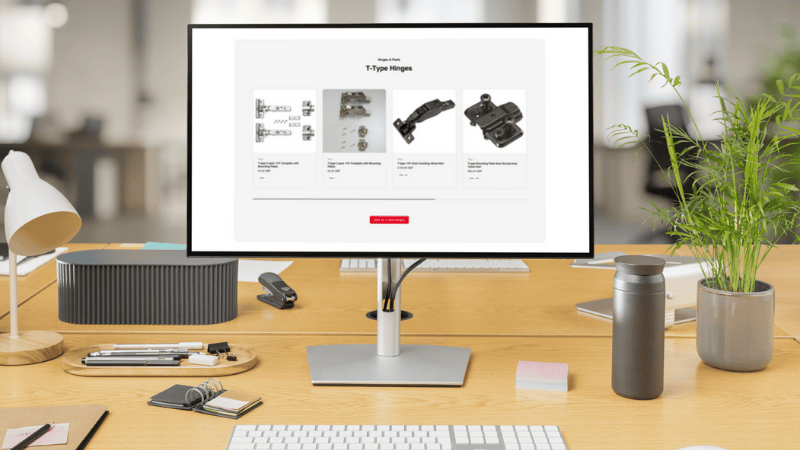
Not every job calls for a bulk order or full-service partnership. The shop is designed for teams who need quality components in smaller volumes, quickly and without fuss.

It’s made for when you need to:

  • Fill short-term gaps in supply to prevent delays
  • Test parts on a new product before committing to larger volumes
  • Order parts by the box for smaller production runs
  • Avoid delays by ordering directly, with shorter lead times

There’s no complex ordering process or high minimum spend. Choose the components you need, order by the box and we’ll send them straight from our UK warehouse with reliable delivery times.

“The shop opens a new door for customers to experience our products on their terms. It’s a quick, convenient way to access the essential Titus components that keep your operations moving smoothly. We’re excited to offer this added flexibility to manufacturers and look forward to welcoming new customers to Titus through this channel.”

Gary McMahon, UK Marketing, Titus

What’s in the shop

The shop includes a focused selection of our most in-demand components, available in box quantities.

You’ll find:

  • T-type soft-close hinges: Smooth, consistent closing with integrated soft-close and three-way tool-free adjustment.
  • Quickfit TL5 connectors: Strong, reliable connectors for wood-based materials. Easy to insert and lock in place, with no tools needed.
  • Tekform Slimline drawer systems: Slim, double-wall drawer units with a sleek profile and soft-close as standard.

These are the components we know manufacturers rely on day-to-day. The shop offers a straightforward way to access them without going through the usual quoting process, streamlining procurement and helping keep projects on track.

View the range

Still built on partnerships

Titus isn’t just a parts supplier; first and foremost, we’re a partner. Most of our work involves long-term relationships with manufacturers and retailers, supporting product development, improving performance and delivering components at scale.

The online shop doesn’t replace the way we usually work. It’s designed for easy ordering in smaller volumes, not for custom builds or complex projects.

If you go on to scale up, explore a new product or want to build a closer relationship with Titus, our team will be on hand to support that. From first contact to full supply, we’ll help you take the next step.

Here’s what our core service typically includes:

  • High-volume supply with consistent lead times
  • Tailored component development to meet your specific needs
  • Technical support that improves performance and solves engineering challenges
  • Hands-on guidance from concept through to delivery
  • A dedicated UK team focused on long-term partnerships

Why we’re a trusted partner

Your shop questions, answered

Is the online shop replacing the usual sales and supply process?

No – the shop is designed for smaller, straightforward orders. Our core business remains focused on high-volume supply and long-term partnerships.

Who is the shop best suited for?

Smaller manufacturers or teams needing quick access to popular components without the usual quoting and bulk order requirements.

What’s the minimum order size?

Orders must be placed in full-box quantities. There’s no large minimum spend beyond that.

Are bespoke or custom components available via the shop?

No. Custom product development is part of our full-service offering and is handled directly by our team.

Will pricing on the shop differ from my current contract?

The shop offers fixed pricing suited to smaller volume orders. For tailored contracts and high-volume supply, our team continues to offer personalised support and pricing directly.

Ready to get started?

Explore the shop for quick and easy access to Titus components. For larger or more specialised orders – or if you have any questions – our team is on hand to provide expert support. Contact us today to learn more.